

With so much uncertainty in the world today, a CEO needs to be certain that they are not the limiting factor in your organization’s success. Leading an organization at the highest level can often feel like an isolating endeavor, so constructive reality checks are sparse. A specialized CEO coaching service eliminates your blindspots, pulls you out of the echo chamber of your company’s culture, and provides the objective partnership to make your vision a reality.
I have seen seasoned executives sabotage new initiatives because their nervous system associated collaboration with vulnerability, and vulnerability with danger. These impulses can happen without us being fully aware. These unprocessed adaptations are survival strategies that outlived their usefulness. Partnering with the right coach ensures you don’t move from survival mode so that your organization can transform and thrive.
True executive growth requires moving past surface-level tactics and addressing both internal leadership regulation and high-stakes strategy. Partnering with a dedicated advisor gives you the private space to refine your decision-making framework, sharpen your operational focus, and build an enduring company culture. Every CEO needs a private space to think out loud without criticism and public consequences. That space is where breakthroughs happen.
When you invest in your own growth, the entire organization rises with you.
When to Get a Coach
Executive coaching often starts with solving a problem such as bringing together a struggling team, addressing a communication breakdown, or developing a new strategy. The coach is seen as the fixer. They can help resolve problems with a fresh perspective, however this is merely the entry point to higher coaching.
A coach who truly sees you as a leader is already thinking about your legacy. They want to see the vision through your eyes and help you reverse-engineer your process so you can identify where you, as a leader, are getting stuck. Once you clear the way internally, the challenge becomes how to communicate that vision in an inspiring way to your team.
That’s why the first question I ask a new CEO I take on as a client is simple: give me a vision of you as a great leader. Not a vision of your company. Not your goals for the organizations. We start with you and your legacy in the making. Most leaders try to erase themselves from the process, yet matching the leader you are becoming with the vision for the organization is the foundation for everything that follows.
That question tends to catch people off guard, even seasoned executives who are used to answering hard questions under pressure. Most have spent years optimizing operations, managing stakeholders, and hitting targets without ever pausing to articulate what greatness looks like in their own mirror. They can describe quarterly goals with surgical precision. But ask them to paint a vivid picture of their leadership at its highest expression, and the room goes quiet.
That silence is not weakness. It is the sound of a leader encountering the edge of their own self-awareness. And that edge is where the real work begins.
Most executives carry an inherited definition of leadership shaped by bosses they admired, parents they feared, and cultures that rewarded stoicism over introspection. They are running a script written by someone else. When I ask for their vision, I am really asking them to stop performing someone else’s idea of authority and start authoring their own.
Once that vision is articulated, everything else becomes measurable. We benchmark decisions against it. We evaluate team dynamics through it. We assess whether the culture they are building reflects the leader they aspire to be or contradicts it. The vision becomes the compass. Without it, coaching is just problem-solving in circles. With it, coaching becomes a disciplined ascent toward your peak expression.
So when should you get a coach? Not when the problem appears. When you are ready to confront the gap between the leader you are and the leader your organization needs you to become.
Beyond the Fixer Mindset
Fresh Perspective Versus Lasting Development
Bringing in a coach for a fresh set of eyes has real value. An outside perspective can spot blind spots, challenge assumptions, and offer a different read on a stuck situation.
But a fresh perspective on a single problem is not the same as building a leader. One gives you an answer for today. The other builds capacity you carry into every future decision.
Why Problem-Solving Alone Falls Short
Fixing the immediate issue can quiet the noise without addressing what’s underneath it. The same pattern often resurfaces in a new form six months later.
Problem-solving treats the symptom in front of you. Defining who you’re becoming as a leader treats the pattern behind it. Both matter, but they are not interchangeable.
The First Conversation With a New CEO
Envisioning Greatness
When I sit down with a new client, I don’t start with their org chart or their quarterly numbers. I start by asking them to describe themselves as a great leader.
Not a great leader in the abstract. Their version of it. What it looks like, sounds like, feels like from the inside.
Why the Question Creates Discomfort
That question usually makes them squirm. These are people who solve problems for a living, who are comfortable naming what’s broken in a business.
Naming what greatness looks like in themselves is a different exercise entirely. It requires stepping out of the operational mindset and into something more personal, which is exactly why it’s worth doing early.
Defining Leadership on Your Own Terms
Personal Values and Purpose
Once the initial discomfort settles, the real work is defining greatness on the client’s own terms, not a generic leadership checklist. That means grounding it in what actually matters to them.
Purpose and values aren’t add-ons to this process. They’re the material the vision is built from.
Observable Leadership Behaviors
A vision has to eventually show up as behavior, or it stays an idea. Part of this stage is translating “great leader” into things that can actually be observed:
- How you show up in a hard conversation
- How you make decisions under pressure
- How you communicate with your team when the stakes are high
Turning Vision Into Measurable Progress
Goals That Support the Bigger Picture
Once we’ve defined what greatness means for a client, we can carve out a path toward it. That path is built from specific goals, each one tied back to the larger vision rather than existing on its own.
A goal disconnected from the vision is just another task on the list. A goal connected to it becomes part of a leader’s growth.
Milestones, Accountability, and Reflection
Milestones give the path structure and let a client see real progress, not just intention. Accountability keeps the work honest between sessions.
Reflection closes the loop, asking what’s working, what’s not, and what’s been learned. Together, these three elements turn a vision into something a leader actually reaches toward, rather than something they talk about once and set aside.
Building Capacity for the Full Potential of Leadership
Recognizing Limiting Patterns
Reaching full potential as a leader usually means noticing the patterns that have been quietly limiting you. These aren’t failures to correct so much as habits worth examining honestly.
Honest reflection and self-awareness are what surface these patterns in the first place. Without that groundwork, they tend to stay invisible.
Leading With Greater Awareness and Empowered Expression
The goal isn’t to arrive at a fixed destination and stop. It’s to build capacity: greater awareness, more purposeful action, and a clearer, more empowered expression of the leader you’re becoming.
That capacity supports individual growth, and it strengthens how you lead an organization. The two are not separate outcomes; they build on each other.
Frequently Asked Questions
How much does a CEO coach cost?
Executive CEO coaching typically ranges from $200 to $800+ per session or $15,000 to $100,000+ annually depending on the coach’s credentials, organizational complexity, and the scope of transformation including leadership development, AI strategy integration, and organizational change management.
Who are the best CEO coaches?
The best CEO coaches are certified professionals with proven executive experience, demonstrated track records of organizational transformation, expertise in emotional intelligence and AI change management, and a commitment to sustainable leadership development that measurably impacts business performance and team dynamics.
What is the 70/30 rule in coaching?
The 70/30 rule in coaching represents the principle that 70% of professional growth derives from challenging on-the-job experiences and real-world application, while 30% comes from formal coaching, mentoring, and feedback, emphasizing experiential learning as the primary driver of transformational leadership development.
What is the world’s largest CEO coaching company?
The largest CEO coaching companies globally include BetterUp, The ExecDev Group, and Heidrick & Struggles, though the most effective coaching relationships prioritize personalized, transformation-focused partnerships over organizational size, with specialized coaches like Breakaway Peak delivering concentrated expertise in AI-integrated leadership transformation.
Content Review & Credentials
Written by: Geo K. Hunter, Executive Leadership Coach & AI Transformation Strategist
Reviewed by: Breakaway Peak Editor & Senior Strategy Team
Last Reviewed: August 26, 2026
How We Review Executive & Leadership Content
Geo K. Hunter reviews all strategic references and framework details for practical accuracy and real-world applicability. Our senior strategy team peer-reviews the content to ensure alignment with current enterprise leadership and AI transformation standards.
Disclaimer: This article and supporting content are provided for informational and educational purposes only and do not constitute formal business, legal, or financial advice. Please Schedule an executive consultation with our team today regarding your organization’s specific CEO coaching needs and leadership transformation strategy.
Read Next
- Breakaway Peak Executive Coaching Services: Explore how Breakaway Peak equips CEO leadership teams with high-impact growth strategies and transformational coaching programs.
- Leadership Coaching Strategy Guide: Discover how your company can only grow as far as your leaders are willing to go through personalized executive coaching excellence.
- Breakaway Peak AI Integration and Transformation: Learn more about CEO coaching, leadership development, and AI change management frameworks for organizational evolution.
- Breakaway Peak Conflict Resolution: Learn more about how to optimize executive team dynamics and integrate AI workflows with conscious leadership practices.
References & Further Reading
- Harvard Business Review – CEO Coaching and Executive Effectiveness: Research and insights on the impact of executive CEO coaching on organizational performance and strategic decision-making.
- The Conference Board – Executive Development Trends: Industry research on CEO coaching trends, emerging leadership competencies, and best practices in executive development.
- Coaching Psychology Research Journal – Evidence-Based CEO Coaching: Academic research on CEO coaching effectiveness, behavioral change, and sustainable executive transformation through professional coaching.
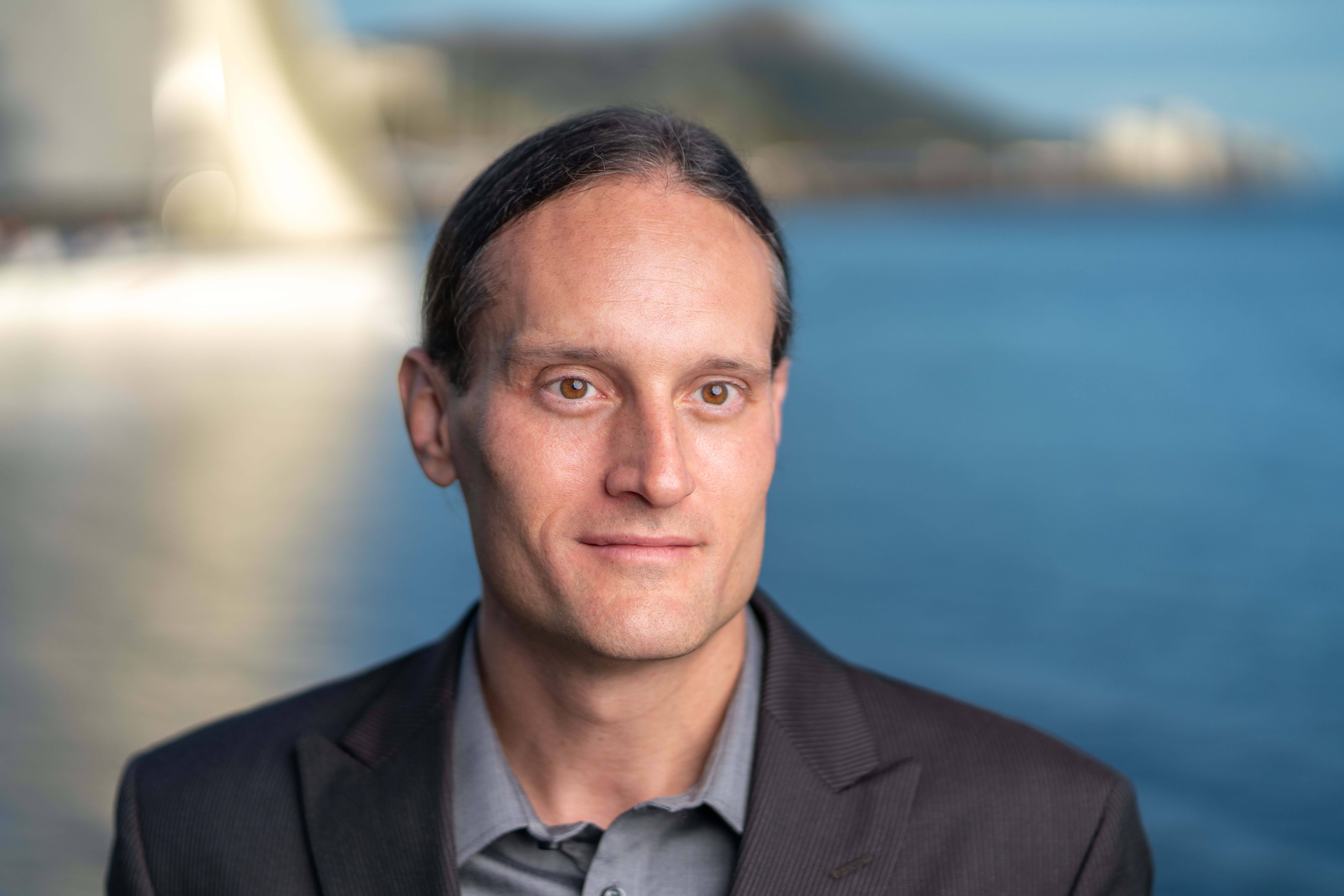
Geo K. Hunter
Executive Leadership Coach & Author
Geo K. Hunter is an Executive Leadership Coach at Breakaway Peak with 25 years of experience empowering enterprise leaders and high-impact entrepreneurs, with specialization in healthcare. A Cornell-certified Conflict Resolution Specialist and mediator, Geo excels at turning complex workplace friction into strategic alignment. Beyond mediation and traditional executive coaching, Geo guides organizations through high-stakes AI change management, helping leadership teams navigate technological shifts with clarity, agility, and human-centered strategy. He has written and directed documentaries for PBS and Prime. His mediation work has been featured on NPR All Things Considered.
